
Services / Tiling
Tiling Contractor in Singapore for Floor & Wall Tiles
Floor and wall tile installation, overlay tiling, hacking, screeding and waterproofing for homes and commercial spaces, carried out by a BCA-licensed General Builder Class 1.
Choosing a tiling contractor in Singapore is really about what happens under the tile. Level screed, sound waterproofing and full adhesive coverage decide whether a floor stays flat and dry for years or starts to crack, leak and pop. Future Home Builder Pte. Ltd. is a BCA-licensed General Builder Class 1 and BCA registered contractor whose team includes project managers, site supervisors and tilers, so your tiling work is planned, prepared and checked as part of one renovation, not handed to whoever is free that week.
What we do
Our Tiling Services in Singapore
Professional tiling for floors and walls, indoors and out, in residential and commercial projects.
Floor Tiling
Floor tiles for living areas, bedrooms, kitchens and corridors, laid on a level bed with even joints and careful tile placement around doors, cabinets and thresholds.
Wall Tiling & Feature Walls
Full-height wall tiles for bathrooms and kitchens, backsplashes and feature walls, set out so cuts sit in corners and lines run straight from floor to ceiling.
Bathroom & Kitchen Tiling
Wet-area tiling with waterproofing, floor falls to the drain and sealed joints, as part of a kitchen or bathroom renovation or on its own.
Overlay Tiling
New tiles laid over existing floor tiles that are still firmly bonded. Less hacking, less dust and a shorter renovation period, where the floor and door heights allow it.
Hacking, Screeding & Re-tiling
Hacking out old tiles, making good the base and screeding to level or to falls before re-tiling, when an overlay is not suitable.
Repairs & Outdoor Tiling
Repair work on popped or cracked tiles, plus tile flooring for balconies, roof terraces and car porches, where slip resistance and drainage matter.

Choosing materials
Types of Tiles and Where Each Works Best
There is no single best tile, only the right tile for the room. Homogeneous tiles have the same colour and material all the way through, so chips show less, which suits busy floors in homes and commercial spaces. Porcelain tiles are dense and absorb very little water, making them a strong choice for bathrooms, kitchens and outdoor areas.
Ceramic tiles are lighter and easier to cut, and work well on walls, backsplashes and feature walls. Marble tiles bring a natural, luxurious look but are softer, can stain or etch, and need sealing and careful installation. Our guides to choosing the right ceramic tile for every room and marble in Singapore homes go into more detail.
Before you choose the best option, think about slip resistance in wet areas, tile size (large-format tiles need a flatter base) and how the floor will meet other finishes such as laminate flooring in the bedrooms.
Overlay or hack?
Tile Overlay vs Hacking Old Tiles
Overlay tiling lays new tiles directly over the old tiles. It is quicker, quieter and produces far less debris, so many homeowners prefer it. It only works when the existing floor is flat and well bonded, and it raises the floor level, which can affect doors, thresholds and the joint with neighbouring rooms.
Hacking removes the old tiles down to the base. It is the right call when tiles are hollow or popping, when the floor is uneven, or in bathrooms where the waterproofing needs to be redone. The floor is then screeded and re-tiled.
HDB flats and condominiums each have their own renovation rules, set by HDB guidelines and the MCST by-laws, on matters such as hacking, noise and working hours. We check the floor on site, tap for hollow tiles and recommend the option that will last, not just the cheapest one.
Behind every tile
Waterproofing, Screed & Why Tiles Pop
Waterproofing in wet areas
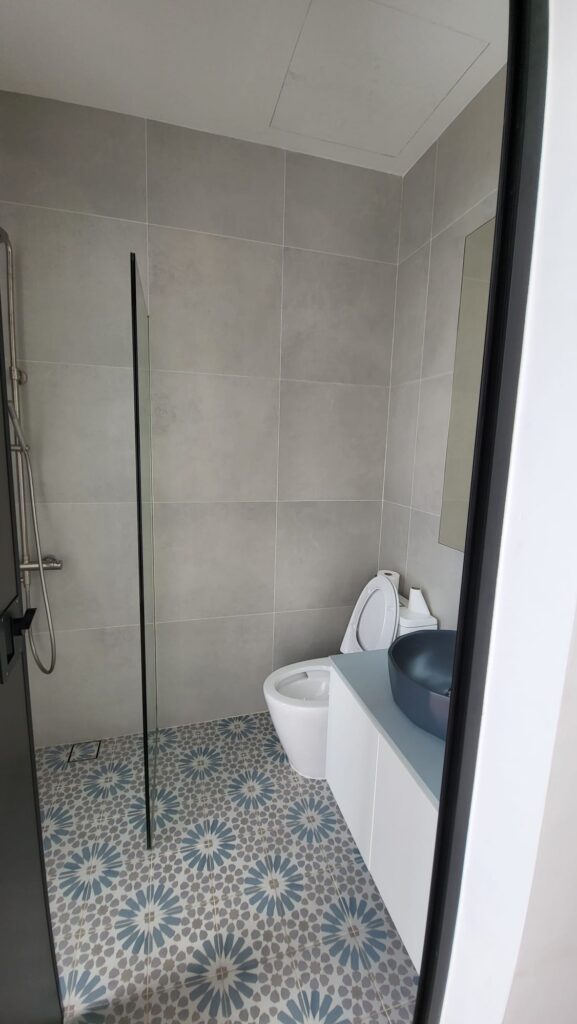
Bathrooms, kitchens, balconies and roof terraces need a waterproof membrane under the tiles, turned up at the walls and around drains and pipes. Tiles and grout alone do not stop water, so the membrane is applied and checked before any tile goes on.
Screeding and levelling
A cement-sand screed gives the tiles a flat, solid base and, in wet areas, the gentle fall that carries water to the floor trap. Screeding is where many tiling jobs go wrong, so we treat it as part of the tile installation, not a separate afterthought.
Why tiles pop
Popped tiles usually come from poor adhesive coverage, a weak or dusty base, missing movement joints, or heat and moisture making the floor expand. Proper installation with full-bed adhesive and planned joints protects against it.
Grout and finishing
Consistent joints, the right grout for the area and clean silicone at corners and fittings are what you see every day. We check level, alignment and hollow spots on every tile before handover.
Budgeting
What Affects the Cost of Tiling Works
Every floor and wall is different, so we price after seeing the site. The main factors are:
- Area and layout: the floor and wall area to be tiled, and how many corners, niches and cut-outs there are.
- Overlay or hacking: hacking adds removal, debris disposal and screeding work.
- Types of tiles: homogeneous, porcelain, ceramic or marble tiles, and their size; large-format and natural stone tiles need more preparation and handling.
- Waterproofing and screed: wet areas, balconies and roof terraces need a membrane and properly formed falls.
- Pattern and detailing: herringbone or diagonal layouts, feature walls, skirting and edge trims take more time.
- Site conditions: access, protection of existing finishes and any building rules on working hours.
You receive an itemised quotation that separates hacking, screeding, waterproofing and tiling, so you can see exactly what is included before any tiling project starts.
How it works
Our Tile Installation Process
01
Site Assessment
We measure, check the existing floor and walls for hollow or popped tiles and discuss the look you want.
02
Tile Selection & Quotation
We advise on suitable tiles and give you an itemised quotation and schedule.
03
Protection & Preparation
Existing finishes are protected, then old tiles are hacked or prepared for overlay.
04
Waterproofing & Screed
Wet areas get a waterproof membrane, and floors are screeded level or to falls.
05
Tiling & Handover
Tiles are set out, laid, grouted and cleaned, then inspected with you at handover.
Our work
Tiling in Our Renovation Projects in Singapore
Tiling features in several of our landed home projects. A few examples:

Meragi Close
Reconstruction of a semi-detached house with a new third storey and attic, finished with marble flooring.
Cheng Soon Garden
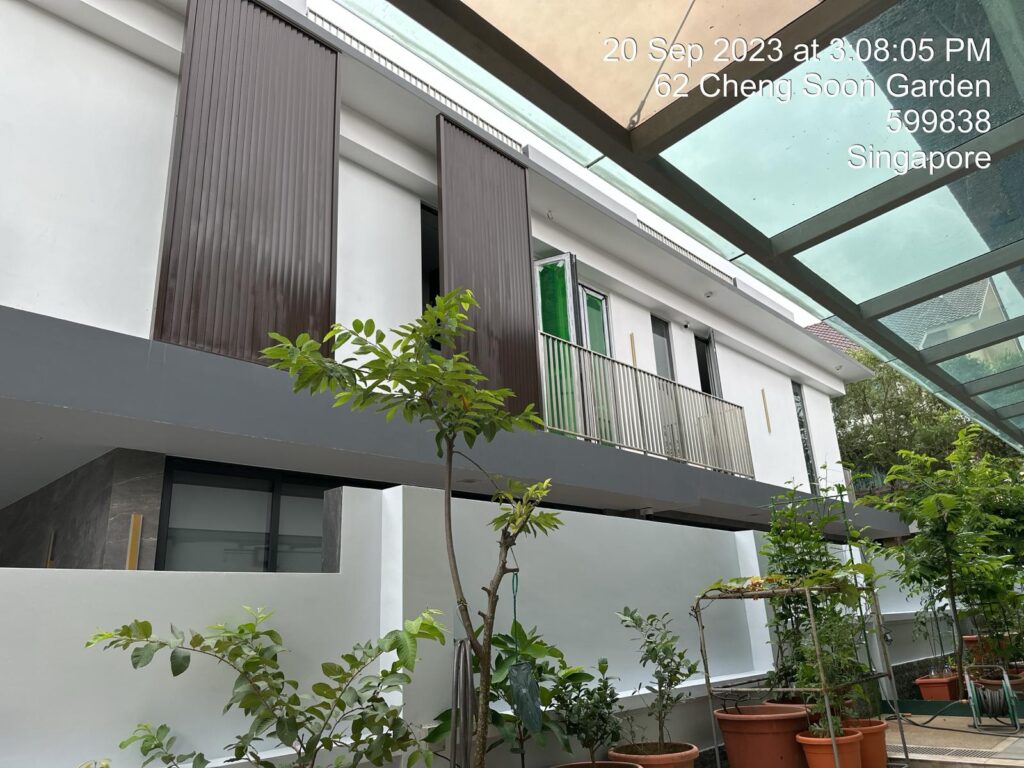
Reconstruction with a new attic, polished marble flooring inside and a balcony finished with high-quality tiling.

West Coast Road
Rebuilding of a landed home, with bathrooms finished in full-height tiling and coordinated roof waterproofing.
At Wilmonar Avenue, bathrooms were built with non-slip flooring and step-free shower zones. Planning a bigger project? See our landed house renovation service.
Why Future Home Builder
A Tiling Contractor You Can Verify
- Licensed Builder: General Builder Class 1 (GB1) under BCA’s Builders Licensing Scheme.
- Registered Contractor: workhead CW02 Civil Engineering, Grade C3, under BCA’s Contractors Registration System. Check both records in the official BCA Directory.
- One team for the whole job: hacking, masonry and tiling planned and supervised together with the other trades, so the base and the finish are done right.
- Homes and commercial spaces: landed homes, condominiums, offices, shops and shoplots for cafes, bars and retail.
Tiling Works: Frequently Asked Questions
What does a tiling contractor do?
A tiling contractor prepares the surface, by hacking old tiles or preparing them for overlay, screeding the floor and applying waterproofing in wet areas, then sets out, lays, grouts and finishes the tiles on floors and walls. A good contractor also advises on the right tile for each area and plans the work around other trades.
How much does tiling cost in Singapore?
It depends on the area, the tile you choose, whether old tiles are hacked or overlaid, and how much screeding and waterproofing is needed. Patterns and natural stone take more labour. We give you an itemised quotation after a site assessment, so every part of the job is priced separately.
Can I lay new tiles over old tiles?
Often, yes. Overlay tiling works when the existing tiles are flat and firmly bonded. It is not suitable over hollow or popping tiles, or in a bathroom where the waterproofing has failed. The new layer also raises the floor, so doors and thresholds need checking. If you live in an HDB flat or a condo, check the HDB guidelines or MCST by-laws that apply first.
Why do floor tiles pop, and can they be repaired?
Tiles usually pop because of poor adhesive coverage, a weak base, missing movement joints, or expansion from heat and moisture. A few popped tiles can be lifted and re-laid if matching tiles are available. If many tiles sound hollow, it is usually better to hack and re-tile the area.
Which tiles are best for bathrooms and kitchens?
Porcelain and homogeneous tiles are popular for floors because they are dense, hard-wearing and absorb little water; choose a slip-resistant finish for bathroom floors. Ceramic tiles work well on walls. Marble looks luxurious but needs sealing and more care, especially near acidic cleaners.
How long does a tiling job take?
It depends on the area and on whether hacking, screeding and waterproofing are needed, since each layer needs time to cure before the next goes on. An overlay is usually quicker than a full hack and re-tile. We give you a realistic schedule with your quotation.
More services
Ready to start your renovation journey? Reach out to Future Home Builder, the trusted renovation contractor in Singapore, and let’s discuss how we can bring your dream space to life. Whether it’s a residential or commercial project, we are here to assist you every step of the way.
Enquire Now